
Module surface and frame
Coated glass, frame edges, seals, labels, connectors, and any visible damage set limits. Abrasive tools, contaminated brushes, harsh chemicals, and thermal shock can create avoidable risk.
Exterior solar module care
Solar panel cleaning removes accessible exterior buildup from serviceable modules. It should respect the glass, coatings, seals, frames, mounts, wiring boundaries, roof system, working temperature, and manufacturer or installer care instructions.
What accumulates on modules
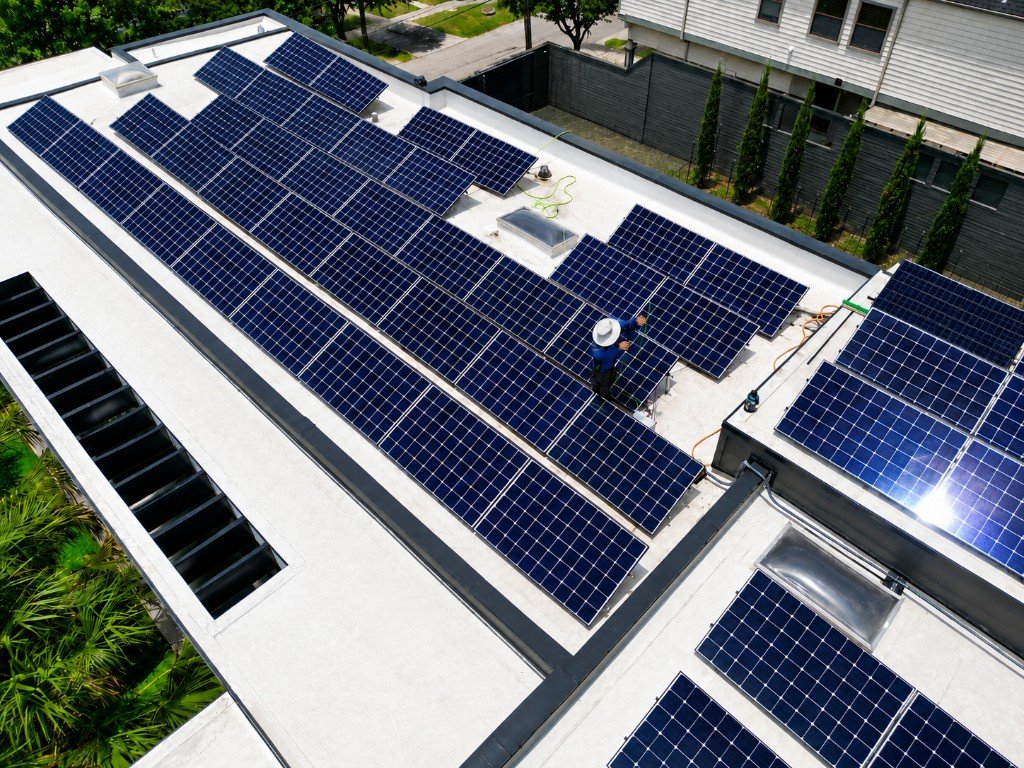
Houston arrays may collect pollen, windblown dust, bird droppings, leaf fragments, insect residue, roof dust, storm debris, and film that gathers along lower module edges. Nearby trees, construction, industrial activity, busy roads, and periods without meaningful rain can increase visible buildup. Low-pitch arrays may shed debris less readily than steeper installations.
Some soiling is broad and light; other contamination is localized and adhered. Bird droppings and sap-like residue may require more dwell and gentle contact than loose dust. Mineral-rich water can leave spotting as it dries. Organic growth around module frames or on the roof should not be assumed to be ordinary panel soil.
Homeowners request cleaning when panels look visibly coated, bird activity is concentrated on the array, pollen has built up, or maintenance is being coordinated with other roof work. Appearance can support a cleaning decision, but system performance should be evaluated through monitoring data and qualified electrical expertise—not inferred from dirt alone.
Equipment and roof characteristics
Safe service depends on both the module care requirements and the surrounding roof-access conditions.
Coated glass, frame edges, seals, labels, connectors, and any visible damage set limits. Abrasive tools, contaminated brushes, harsh chemicals, and thermal shock can create avoidable risk.
Pitch, material, wear, penetrations, walk paths, setbacks, fragile roofing, and array spacing determine whether the modules can be accessed without compromising the roof.
Cleaning stays on accessible exterior surfaces. Wiring, junctions, inverters, damaged connectors, exposed conductors, and suspected electrical defects are outside a cleaning scope.
Recommended approach
The appropriate method starts with manufacturer or installer instructions when available. For serviceable modules, exterior cleaning generally favors soft, non-abrasive tools, controlled water flow, and a rinse that minimizes mineral residue. Purified water may be selected to reduce spotting from dissolved solids. Adhered contamination can require patient wetting and gentle agitation rather than added pressure.
Concentrated pressure is not an acceptable shortcut around frames, seals, wiring, junction areas, roof penetrations, or fragile coatings. Abrasive pads, dirty brushes, scraping, stepping on modules, and unapproved chemicals can scratch or damage equipment. Overspray and runoff must also be managed around roofing, gutters, plants, and electrical components.
The safest outcome may involve limited reach from an approved position rather than walking the full roof. If the array cannot be reached responsibly, the scope should be modified or declined. Equipment care instructions and safe access take priority over achieving a perfectly uniform appearance.
Soft Wash Houston process
Module count alone is not enough; roof type, pitch, setbacks, obstacles, condition, and equipment boundaries shape the work.
Photos and property details establish module layout, roof material, height, pitch, buildup, bird activity, and possible access paths.
Visible module damage, wiring concerns, roof wear, manufacturer instructions, heat, weather, and equipment limitations are considered.
The work area, landscaping, drainage, roof contact, people below, and the safest practical cleaning position are established.
Appropriate water, non-abrasive contact, and controlled rinsing remove serviceable exterior soil without harsh pressure.
Accessible modules are reviewed for remaining adhered deposits, rinse quality, damage that remains, and any areas excluded from reach.
Expected results and limitations
Loose dust, pollen, ordinary environmental film, and serviceable bird residue should show visible improvement. Heavier adhered material can need additional gentle attention. Module edges, clamps, frames, or roof geometry may limit access to every small area.
Etching, scratches, coating damage, internal discoloration, delamination, seal failure, corrosion, burned cells, wiring problems, and marks beneath the glass will not be corrected by exterior cleaning. Hard-water deposits may require separate evaluation and may remain if the glass has been permanently altered.
Soft Wash Houston should not promise a percentage gain in energy production. Even when soil is removed, output varies with weather, season, shade, orientation, temperature, system design, and equipment condition. Homeowners should use their monitoring system and solar provider to evaluate performance.
Preparation and upkeep
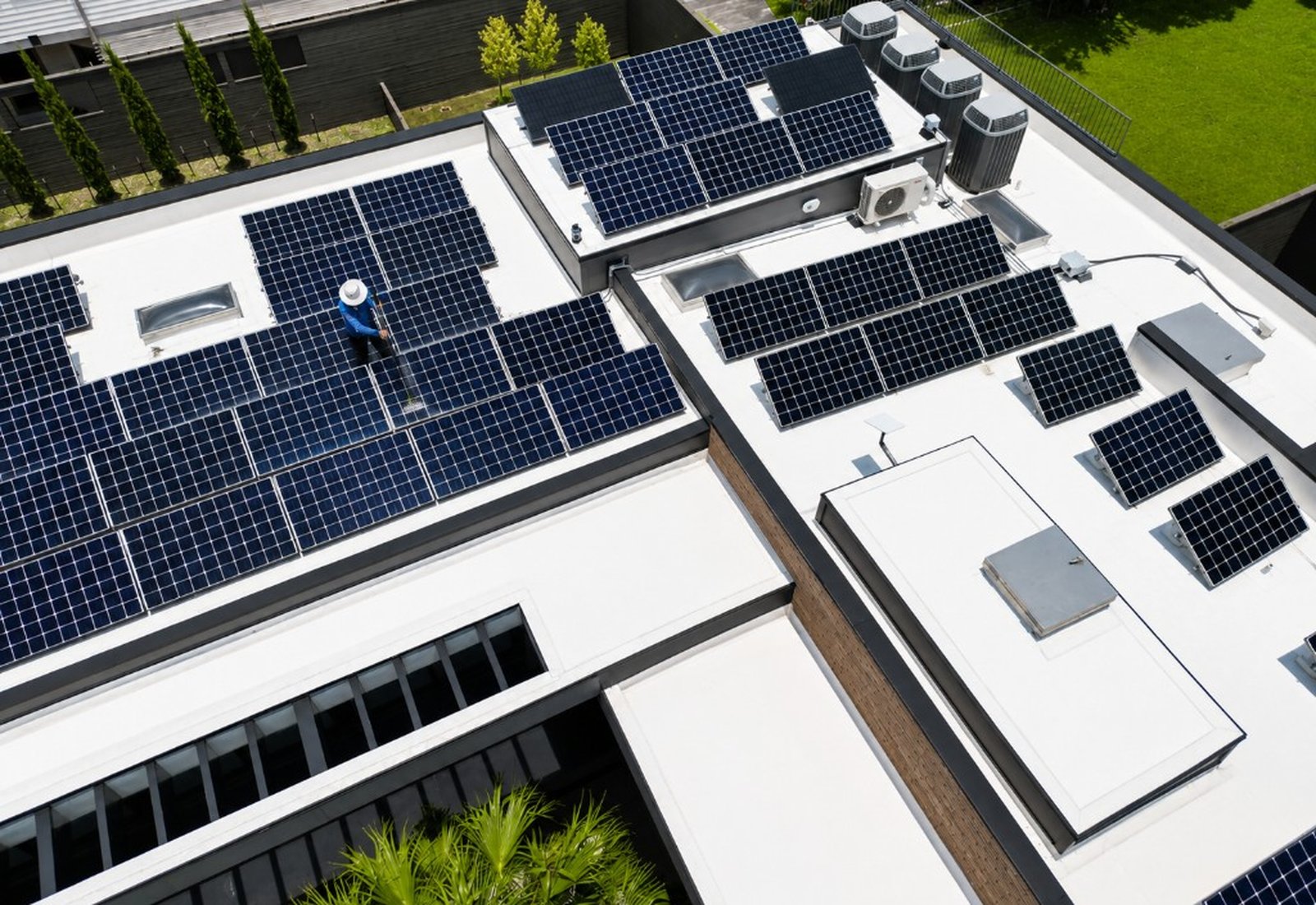
Inspect from the ground where possible and review production trends without assuming every change is caused by dirt. Tree cover, pollen, bird concentration, nearby construction, road dust, roof pitch, and the frequency of effective rain all influence recurrence. Follow manufacturer and installer guidance, and coordinate electrical concerns with the solar provider.
Related exterior work
Read the rooftop solar cleaning case study, browse the project gallery, or confirm Houston-area coverage.
Questions property owners ask
Cleaning removes serviceable exterior soil, but no specific energy gain can be promised. Production also depends on sun exposure, season, shading, system design, module condition, and electrical performance.
Concentrated pressure should not be used as a shortcut on modules, seals, wiring, mounts, or roof interfaces. Cleaning must follow the equipment's care guidance and use a controlled method suitable for the array.
No universal schedule fits every array. Inspect production trends and visible conditions while accounting for pollen, bird activity, tree cover, dust, roof pitch, rainfall, and manufacturer or installer recommendations.
Rain can move loose dust, but it may not remove adhered pollen, bird droppings, or grime at module edges. Rain can also leave redistributed soil. Whether cleaning is useful depends on the actual condition.
No. Exterior cleaning does not test wiring, inverters, grounding, output, mounts, roof penetrations, or electrical safety. Suspected system problems belong to the installer or a qualified solar professional.
Access before appearance
Share safe photos, module count if known, roof type, system documentation, visible buildup, bird activity, access constraints, and any known roof or electrical concerns.