
Define assets and priorities
Property contacts identify elevations, hardscapes, glass, problem areas, operating constraints, access, and the desired maintenance outcome.
Managed-property exterior care
Commercial cleaning is a site plan, not a single method. Facades, entries, sidewalks, loading areas, exterior glass, and solar equipment require different tools—and the work must account for occupants, operations, drainage, access, and documentation.
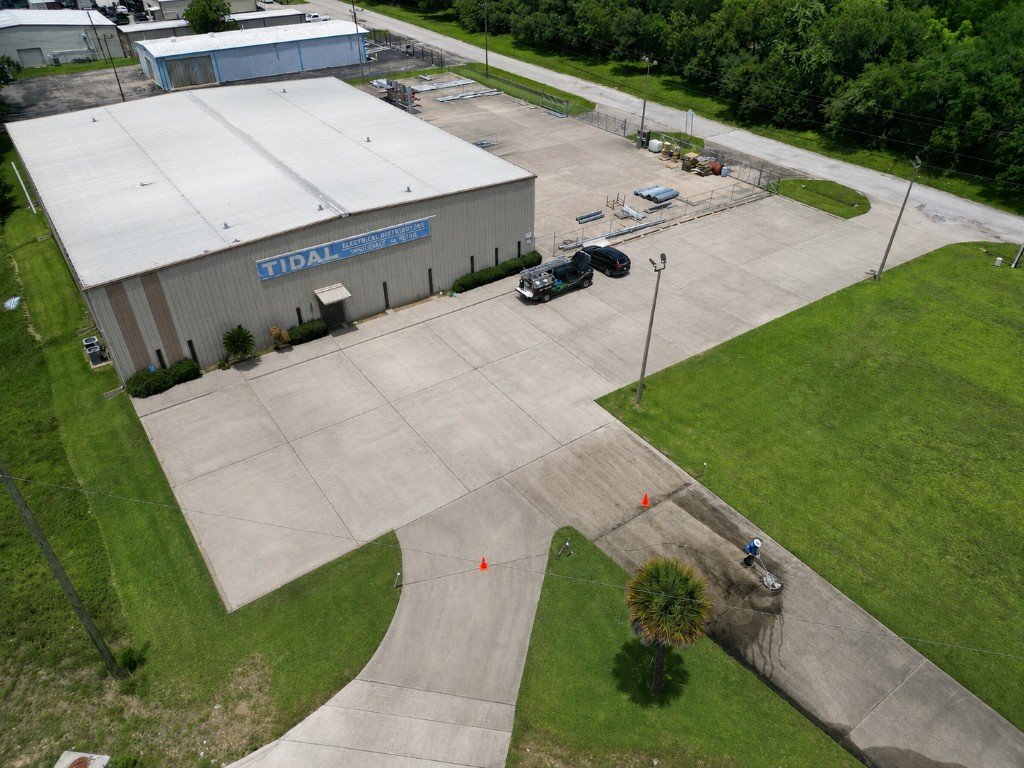
Property and contamination review
Soft Wash Houston can review exterior cleaning for serviceable storefronts, offices, warehouses, apartment and HOA common areas, churches, restaurants, medical and professional buildings, managed properties, and other commercial exteriors. Property use affects the plan: a quiet warehouse apron has different access, safety, and timing needs than an occupied retail entrance or residential community walkway.
Houston facades and hardscapes collect algae-like film, mildew-like spotting, pollen, traffic soil, pollution, bird residue, cobwebs, irrigation marks, roof runoff, dumpster-area residue, and general atmospheric buildup. Shaded elevations, service alleys, drainage paths, and areas near landscaping often soil faster than open, sunny walls. Loading areas and parking approaches add tire residue, oil, metal marks, and embedded soil.
A commercial quote begins by defining the assets and priorities: appearance, organic-growth removal, entry cleaning, tenant turnover, scheduled maintenance, preparation for inspection, or a specific facade concern. The cleaning goal must then be reconciled with material condition, public access, hours, water, security, drainage, and neighboring property.
Material and operations matrix
Mixed construction makes universal pressure and chemistry especially risky.
| Asset | Likely method category | Planning concerns |
|---|---|---|
| Painted, stucco, metal or masonry facade | Low-pressure treatment, controlled rinse, and selective detailing | Coatings, oxidation, joints, signs, tenants, doors, vents, landscaping, and water entry |
| Sidewalks, entries and concrete aprons | Pretreatment, surface cleaning, edge work, and managed rinse | Pedestrian routing, slip exposure, drainage, storefront glass, joints, stains, and reopening time |
| Exterior glass and frames | Window-specific brush, purified-water, or hand-detail methods as scoped | Minerals, tint, seals, security, interior sensitivity, upper access, and finish expectations |
| Awnings, canopies and signage | Material-dependent low-impact cleaning or exclusion | Fabric, graphics, wiring, adhesives, oxidation, fasteners, age, and manufacturer care |
| Solar arrays and roofs | Separate specialty plans based on equipment and roof system | Electrical boundaries, roof condition, mounts, access, runoff, temperature, and system guidance |
Risk-managed cleaning
Commercial soft washing uses controlled treatment and low-pressure rinsing on serviceable facades where organic contamination needs to be addressed without aggressive water impact. Durable flat concrete may call for mechanical surface cleaning. Exterior glass needs a glass-specific finish. Rust, oil, minerals, efflorescence, graffiti, oxidation, and coating restoration require separate identification.
Incorrect pressure can etch concrete, cut coatings, damage mortar, disturb oxidation, drive water through openings, and leave uneven marks across a highly visible elevation. Incorrect treatment, overspray, inadequate rinsing, or poor containment can affect plants, vehicles, neighboring tenants, signs, metal, glass, pools, and drainage systems.
The work plan should specify application zones, access control, pedestrian or vehicle routing, protection steps, runoff direction, communication contacts, and the sequence of surfaces. If the site remains occupied, wet surfaces and active equipment need a clearly defined boundary. If work occurs after hours, lighting, security, water access, alarms, and next-morning readiness become part of the scope.
Soft Wash Houston process
Commercial work is scoped around the property, surfaces, stakeholders, and operating environment.
Property contacts identify elevations, hardscapes, glass, problem areas, operating constraints, access, and the desired maintenance outcome.
Materials, coatings, contamination, stains, drainage, utilities, traffic, security, landscaping, and pre-existing damage are reviewed.
The quote defines methods by surface, included areas, limitations, protection, access control, sequencing, scheduling, and communication.
Controlled application, dwell, surface cleaning, detail work, and rinsing proceed in manageable sections around site operations.
Completed areas, remaining specialty stains, permanent conditions, access exclusions, and requested before-and-after documentation are reviewed.
Performance expectations
A commercial completion standard should reflect what cleaning can actually change.
Serviceable organic film, atmospheric soil, pollen, cobwebs, and broad exterior grime should show a clear improvement when the correct method reaches the area.
Active traffic, wind, rain, irrigation, deliveries, landscaping, roof runoff, and neighboring work can affect drying and how quickly high-use areas collect new soil.
Oxidation, failed coatings, rust, oil, minerals, efflorescence, etching, corrosion, repairs, faded signage, and structural defects can remain visible.
Before-and-after documentation is useful when the viewing angle, lighting, and service area are consistent. It should record the cleaning outcome without implying repair or restoration that was not performed.
Site preparation and maintenance
After the initial service, watch which elevations and zones soil first. Shaded walls, dumpster approaches, food-service areas, north-facing walks, irrigation paths, tree-covered entries, loading zones, and roof-drain outlets often need attention sooner than open facades. A useful maintenance plan prioritizes those zones instead of automatically repeating the entire original scope on a fixed schedule.
Surface-specific commercial options
Read the commercial soft wash case study, explore the full exterior cleaning overview, or confirm service-area coverage.
Questions property teams ask
Scheduling constraints can be reviewed as part of the scope. Access, noise, wet surfaces, overspray, deliveries, security, and drying time still determine what can be completed safely during or outside operating hours.
Not automatically. Facade soft washing, hardscape surface cleaning, and detailed exterior window cleaning are distinct methods. A commercial proposal should state which surfaces and tasks are included.
A test area may be useful when coatings, oxidation, restoration stains, or material response are uncertain. Whether a test is practical depends on access, visibility, setup, and the proposed scope.
Those are specialty conditions rather than ordinary organic buildup. They require separate identification and may need a different treatment; full removal cannot be assumed.
Recurring needs can be discussed after the initial condition, site constraints, drainage, and cleaning response are understood. The useful interval depends on the property rather than a universal schedule.
From photos to an onsite plan
Share the site address, property type, priority surfaces, operating hours, access and drainage constraints, desired timing, and photos of each area or condition that needs review.