
Scope review
Photos and property details help identify wall materials, elevations, access, visible buildup, and areas that may need closer inspection.
Residential exterior care
House washing removes exterior buildup from siding, stucco, brick, painted trim, soffits, fascia, and other serviceable surfaces. The cleaning plan should protect the material beneath the dirt—not simply make the strongest possible pass.
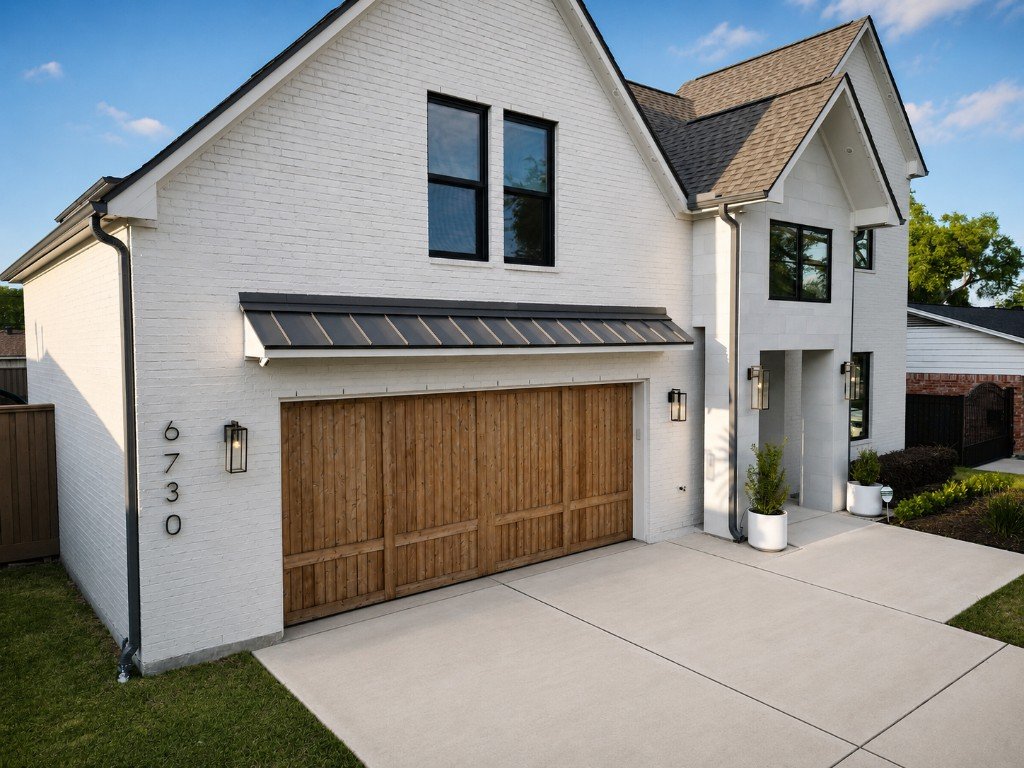
What house washing addresses
Homeowners often call every dark or green patch “mold,” but an exterior appearance alone is not enough to make that identification. Houston homes commonly collect algae-like organic growth, mildew-like spotting, pollen, dust, atmospheric soil, insect residue, cobwebs, and splash-back from the ground. Shaded walls and areas near dense landscaping tend to stay damp longer, while roof runoff and poor drainage can concentrate streaks below gutters or rooflines.
House washing is requested when a facade looks uneven, green film returns on shaded elevations, trim holds dark spotting, or general buildup makes the exterior appear dull. It applies to many detached homes, townhomes, and residential exterior surfaces, but “whole-house wash” does not mean every material receives the same treatment.
Houston's warmth and humidity support faster organic recurrence than a dry climate. Pollen seasons, storm residue, irrigation overspray, tree cover, and limited sun exposure can further affect one wall without affecting the next. Those patterns help determine whether the discoloration is likely cleanable buildup or a sign of drainage, coating, or material failure.
Material characteristics
Age, porosity, coating condition, oxidation, joints, penetrations, and previous damage matter as much as the visible soil.
| Surface | What affects cleaning | What the operator watches for |
|---|---|---|
| Vinyl or composite siding | Panel overlap, weep paths, sun exposure, oxidation, and age | Water entry behind laps, loose panels, and chalky oxidation that may show as uneven color |
| Painted siding and trim | Paint adhesion, age, touch-ups, and prior coating failure | Peeling, blistering, bare substrate, loose caulk, and areas where cleaning may expose existing wear |
| Stucco | Texture, porosity, hairline cracks, drainage details, and previous repairs | Streaking, water intrusion, inconsistent absorption, fragile finish coats, and permanent discoloration |
| Brick and mortar | Porosity, mortar condition, efflorescence, paint, and runoff patterns | Loose mortar, mineral bloom, deep-set stains, and sensitive adjacent trim or windows |
| Soffits, fascia and gutters | Vents, joints, coatings, oxidation, and roof drainage | Water entry through openings, “tiger striping” or electrostatic staining, and failed paint |
Standard washing addresses ordinary exterior soil and organic buildup. Oxidation removal, paint restoration, efflorescence, rust, and other specialty conditions should be evaluated separately.
Recommended approach
On siding, stucco, paint, and detailed elevations, the cleaning solution and dwell time should do more of the work than impact from a concentrated stream. A controlled soft-wash approach applies an appropriate exterior-cleaning treatment, allows time for it to work on organic film, and follows with a managed low-pressure rinse. More durable masonry details may receive targeted agitation or adjusted rinsing, but only when the condition supports it.
This is different from sweeping a high-pressure wand across the wall. Excessive pressure can etch softer finishes, force water behind siding, disturb oxidation, lift weak paint, cut window seals or caulk, damage mortar, and leave obvious wand marks. Overly strong solution, inadequate plant protection, and incomplete rinsing can also create problems even when the pressure is low.
Method selection should occur after the operator identifies the surface and tests uncertain areas. If the wall is heavily oxidized, deteriorated, recently repaired, or already leaking, the plan may need to change—or the affected area may be excluded until repairs are made.
Soft Wash Houston process
The service sequence is adjusted for the home's materials, openings, landscaping, access, and pre-existing condition.
Photos and property details help identify wall materials, elevations, access, visible buildup, and areas that may need closer inspection.
The operator reviews paint, stucco, mortar, windows, vents, outlets, oxidation, leaks, and fragile or loose components before application.
Windows and access are confirmed; landscaping and vulnerable items are managed with wetting, controlled application, and rinsing as the scope requires.
Treatment, dwell time, light detailing, and rinse pressure are adjusted by material instead of applying one setting to the entire house.
The completed elevations are checked for remaining cleanable buildup, rinse quality, limitations, and pre-existing conditions that remain visible.
Expected outcome
A responsible quote separates cleanable contamination from deterioration or specialty staining.
Loose dirt, pollen, cobwebs, surface film, and treatable organic buildup should show a clear improvement. Results on many facade surfaces are visible after the final rinse.
Heavy organic colonies, deeply textured areas, shaded masonry, insect spotting, and drainage streaks may respond unevenly or require additional spot attention.
Oxidation, sun fade, failed paint, etching, mortar loss, rust, mineral deposits, efflorescence, artillery fungus, and permanent discoloration are not ordinary wash results.
Preparation and upkeep
There is no useful one-size-fits-all interval. Inspect shaded elevations, walls below roof runoff, areas near trees, and surfaces reached by irrigation. Recurrence is usually faster where moisture lingers and slower on open, sunny elevations. Address drainage and irrigation patterns where practical; cleaning alone cannot prevent the conditions that cause repeated streaking.
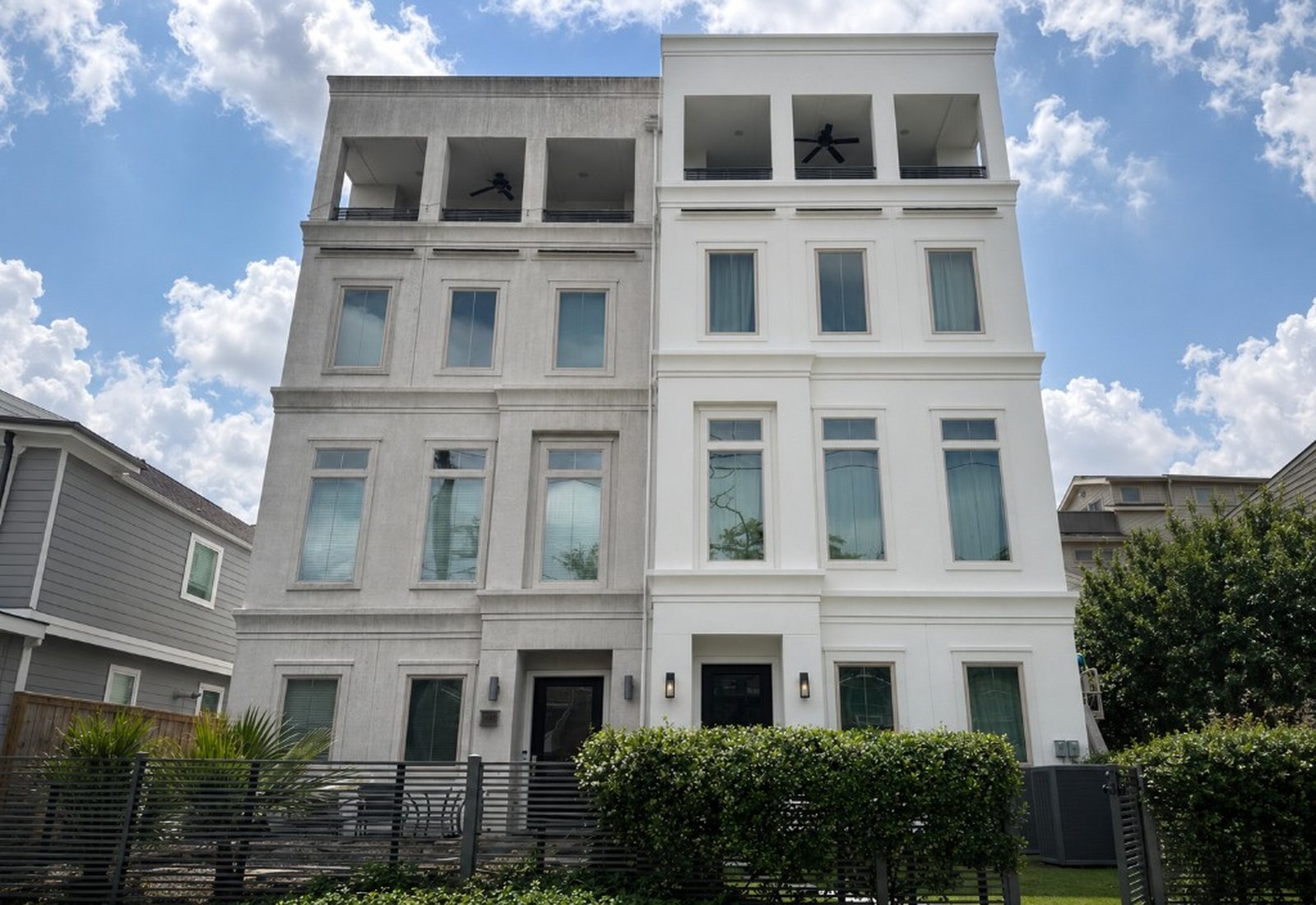
Related exterior work
Ready to request service? Visit house soft washing in Houston or the dedicated stucco cleaning page. You can also read the brick and stone case study or view the house washing gallery.
Questions homeowners ask
House washing rinses exterior glass as part of cleaning the surrounding facade, but it is not the same as a dedicated exterior window cleaning service. If a detailed glass finish, screen cleaning, or frame work is important, include window cleaning in the requested scope.
It may be cleanable, but oxidation changes the risk and the expected result. Loose chalking can be disturbed, and standard washing does not reverse sun-faded or oxidized material. The condition should be identified before work begins.
Not necessarily. Rust, mineral deposits, and irrigation staining are different from ordinary organic buildup and often require a separately evaluated stain treatment. Permanent discoloration can remain.
Close and latch windows, identify any known leaks or failed seals, and remove fragile items near the exterior. The service plan should account for vulnerable openings and weathered caulking.
Many exterior-only projects can proceed when the scope, water access, gates, pets, and property-protection details are confirmed in advance. Any known leaks, damaged surfaces, or access concerns should be discussed before the appointment.
A surface-specific quote
Share the address, wall materials if known, wide photos, close views of the buildup, and any concerns about paint, stucco, plants, windows, or access.