
Identify the surfaces
Photos and inspection distinguish ordinary concrete from pavers, coatings, decorative finishes, repairs, young concrete, and specialty stains.
Concrete and hardscape care
Concrete cleaning can remove broad areas of organic film, soil, and traffic residue, but durable does not mean indestructible. Age, finish, porosity, prior damage, drainage, and the type of stain determine the safe method and realistic result.
The problem beneath the dark appearance
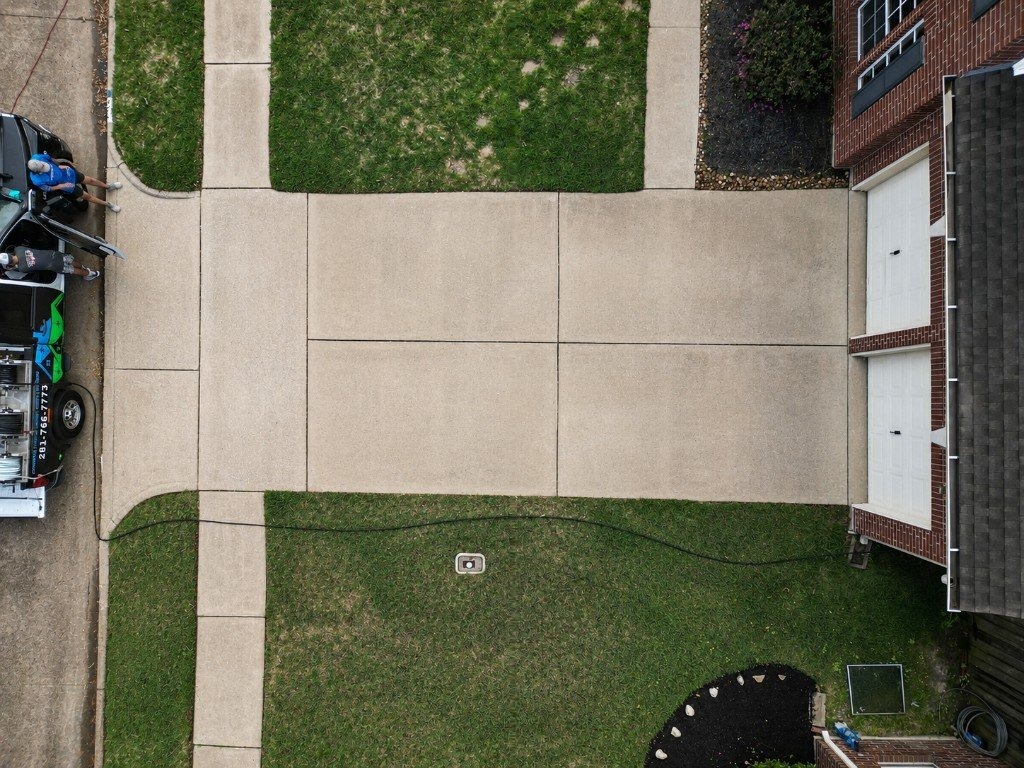
Driveways, walkways, patios, curbs, and pool decks collect airborne soil, pollen, leaf tannins, tire residue, mud, irrigation splash, and organic film. Because concrete is porous, discoloration may sit on the surface, penetrate into the cap, or travel from below with moisture. Shade and standing water encourage green or dark organic buildup, while vehicle areas add oil, rubber, brake dust, and automotive fluids.
Houston rainfall can move soil across sloped flatwork and concentrate debris along low edges. Humidity slows drying in shaded side yards and under trees. Irrigation may repeatedly wet the same strip and leave both organic growth and mineral deposits. Pool environments add sunscreen, body oils, chlorinated splash, and metal-furniture marks that are not identical to driveway soil.
Homeowners request cleaning when concrete looks generally dark, becomes slippery with surface film, shows obvious traffic paths, or no longer matches adjacent flatwork. A general clean can create a major visual improvement, but individual rust, oil, paint, fertilizer, and mineral stains must be judged separately.
Hardscape characteristics
The method must respect finish, age, jointing, coatings, and everything around the work area.
| Surface | Key characteristics | Common concerns |
|---|---|---|
| Broom-finished driveways and walks | Durable but porous, with joints, edges, repairs, and varying aggregate | Wand marks, etching, exposed aggregate, tire paths, oil penetration, and runoff to streets or lawns |
| Patios and pool decks | May have decorative finishes, coatings, texture, or adjacent pools and furniture | Slip risk, coating damage, metal stains, drainage, pool contamination, and sensitive landscaping |
| Pavers | Individual units with joint sand, possible sealer, and variable stability | Sand loss, shifting units, failed sealer, weeds, efflorescence, and uneven color |
| Stamped, colored or sealed concrete | Appearance depends on a surface treatment or coating | Color loss, whitening, peeling sealer, gloss variation, and the need for a lower-impact test area |
| Older or previously damaged concrete | May already be etched, spalled, patched, or aggressively cleaned | Cleaning can reveal existing damage and repairs without correcting them |
Recommended approach
Serviceable uncoated concrete may be cleaned with a combination of controlled pretreatment, an appropriately operated rotary surface cleaner, edge work, and a thorough rinse. The treatment loosens or addresses organic contamination; the surface cleaner helps produce more consistent passes than freehand wand cleaning; and the rinse moves released soil away from the finished area.
Pressure is adjusted for the concrete's age and condition. Too much impact, a concentrated nozzle, slow or uneven passes, or incorrect surface-cleaner setup can etch the cement paste, expose aggregate, leave stripes, or create permanent wand marks. Too little attention to drainage can move dirty water onto walls, doors, landscaping, a pool, neighboring property, or already-cleaned surfaces.
Soft washing alone is not automatically the best answer for embedded soil on durable flatwork, and pressure alone may not address organic contamination evenly. The value comes from sequencing the methods and keeping specialty stains separate from the general clean.
Soft Wash Houston process
Edges, joints, drainage, adjacent materials, and stain type are reviewed before the broad cleaning begins.
Photos and inspection distinguish ordinary concrete from pavers, coatings, decorative finishes, repairs, young concrete, and specialty stains.
Vehicles, doors, walls, outlets, plants, pools, street runoff, loose joint sand, and low areas are included in the work plan.
Loose debris is addressed and a surface-appropriate treatment may be applied where organic film or general soil calls for it.
Serviceable flatwork receives controlled, overlapping surface-cleaner passes, with careful edge and detail work where appropriate.
Released soil is rinsed along the planned path, then remaining stains, color variation, damage, and drying behavior are reviewed.
Expected results and limitations
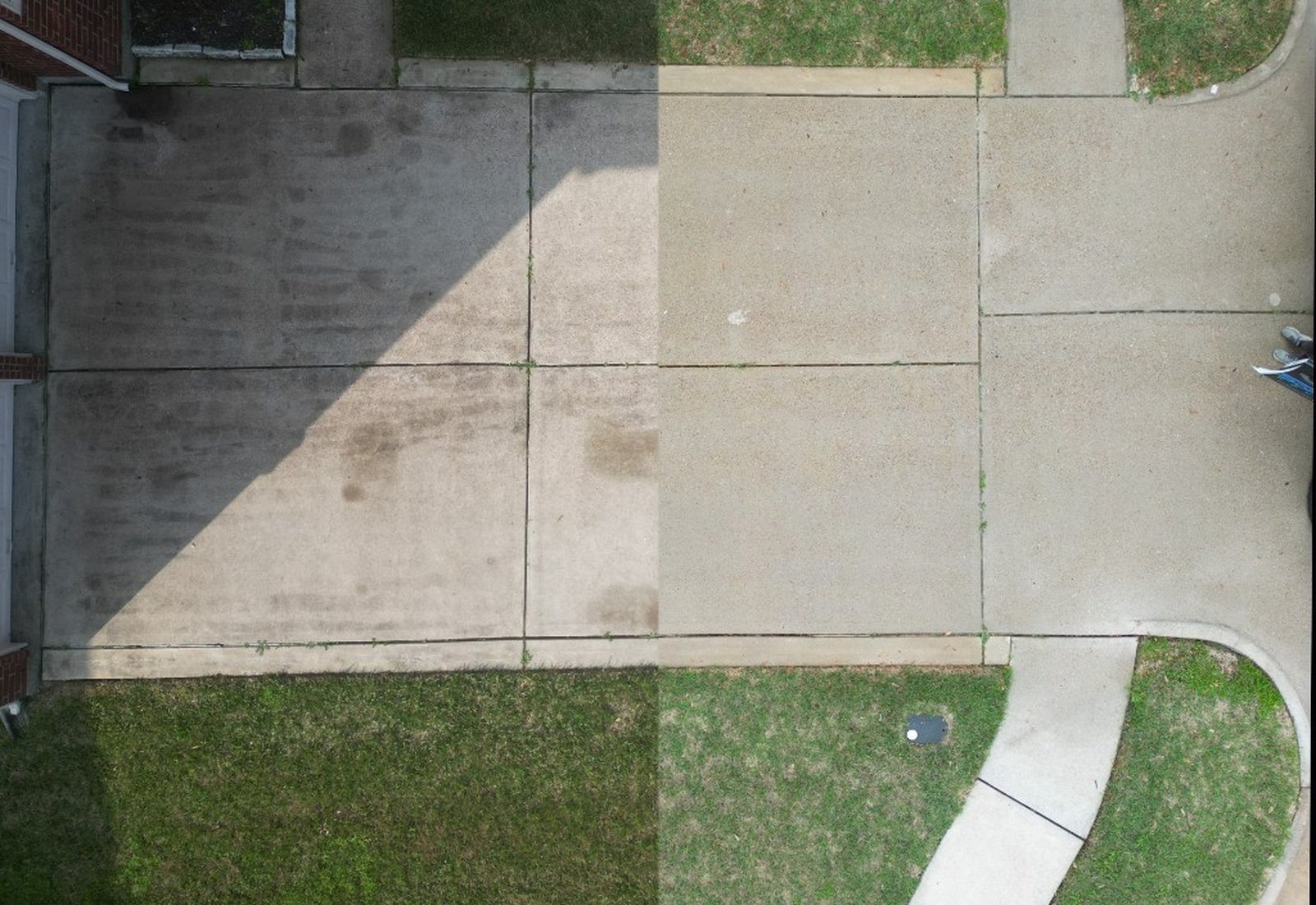
Concrete often looks substantially brighter after broad organic soil is removed, yet a clean slab can still show material variation and absorbed stains.
| Condition | What routine cleaning may do | Why a mark may remain |
|---|---|---|
| Organic film, algae-like growth and soil | Usually shows clear overall improvement with the correct treatment and mechanical cleaning | Deep pores, cracks, constant moisture, or heavy shade can create uneven or faster recurrence |
| Oil and automotive fluids | May remove loose surface residue and improve the surrounding area | Petroleum can penetrate deeply; older stains and prior treatments limit removal |
| Rust, fertilizer and irrigation marks | General soil around the mark can improve | Metal and mineral reactions need separate evaluation and can permanently discolor concrete |
| Efflorescence and minerals | Loose surface material may rinse away | Moisture moving salts through masonry is not solved by routine washing |
| Paint, sealer and previous damage | Can make the surrounding slab cleaner | Coatings, etched areas, repairs, exposed aggregate, and wand marks are material conditions |
Concrete can dry lighter and more evenly over time after the rinse. Shade, humidity, low spots, and weather determine drying time; evaluate the result after the surface has had a reasonable chance to dry.
Homeowner preparation
Watch shaded edges, joints, north-side walks, areas below downspouts, and strips reached by irrigation. Sweep leaf litter and soil before they hold moisture, correct sprinkler overspray where possible, and address drainage or leaks that keep concrete wet. Cleaning frequency varies by shade, traffic, tree cover, slope, and weather; the appearance and surface condition are better triggers than a fixed interval.
Related exterior work
Read the concrete driveway case study and patio and pool deck case study, browse the project gallery, or check the service area.
Questions homeowners ask
Routine cleaning can improve surrounding soil and some surface residue, but absorbed oil often requires a separate treatment and may remain visible. Age, previous products, and depth of penetration affect the result.
Fresh or relatively young concrete can be more vulnerable to marking and surface damage. The age, finish, cure condition, and contractor guidance should be reviewed before cleaning.
Not always. Repairs, aggregate exposure, previous wand marks, tire wear, drainage patterns, sealer, sun exposure, and subsurface staining may become more noticeable after general soil is removed.
No. Paver material, joint sand, sealer, stability, and drainage change the method. Aggressive cleaning can remove joint material or disturb a failing surface, so pavers need separate evaluation.
The surface should be allowed to drain and dry enough for safe use. Timing varies with weather, shade, slope, and any separately applied treatment or sealer; follow the service-specific guidance provided for the property.
Scope the surface and the stains separately
Send wide photos of the full area, close photos of stains or damage, and notes about coatings, pavers, pool edges, drainage, access, and the approximate age of newer concrete.